Core Vocabulary vs Fringe Vocabulary
In this blog post today I’m going to be sharing about the differences between core vocabulary vs fringe vocabulary. We’ll be touching on what they are and being able to understand what makes them different but also how they work together.
When we first begin to learn about AAC and communication you will most likely start to hear these terms in meetings, training or speech therapy sessions.
And while you might be wondering what they both are .. the truth is they are both very important. Both core and fringe vocabulary have a place in helping our students to communicate effectively. The key is just understanding what makes them different and how they work together.
What is Core Cocabulary?
Core vocabulary is made up of the words we use most frequently in our everyday conversations.
These are words like:
- Go
- Stop
- Help
- More
- Want
- In
- Out
- Up
- Down
- Look
- Like
- Get
- Open
- Put
- Yes
- No
Although there are only a relatively small number of core words, they do make up the majority of what we say every day. Core words are incredibly flexible because they can be used in lots of different situations and environments.
For example, the word go could be used to say:
- Go outside.
- Go home.
- Go fast.
- Ready, set, go!
- I want to go.
- Can we go to the park?
One simple word can communicate a lot of different ideas. And that’s exactly why core vocabulary is such a powerful foundation for communication for our students.
What is fringe vocabulary?
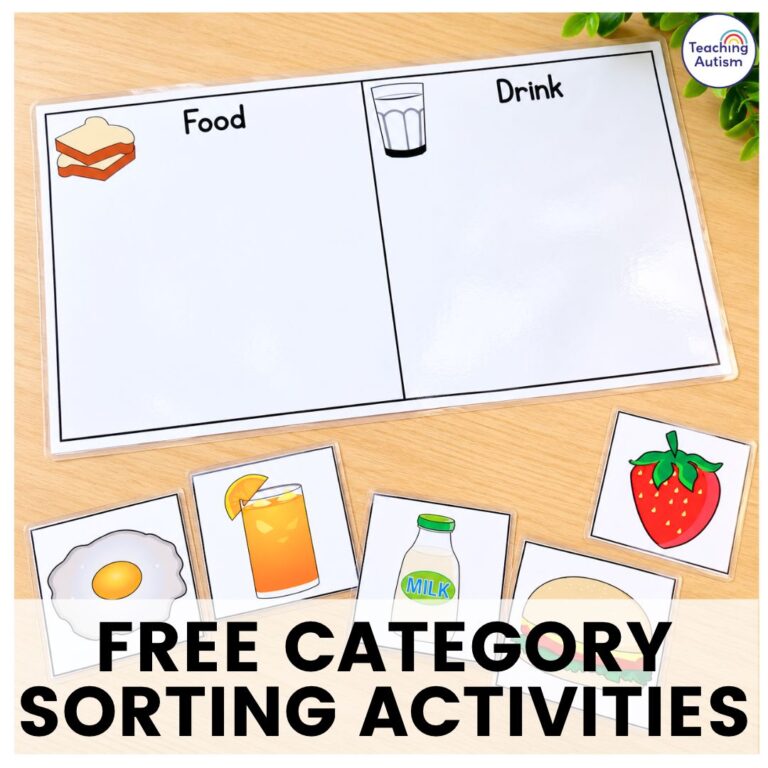
Fringe vocabulary is made up of words that are more specific. These are often nouns that name people, places, foods, animals, toys, and favorite activities.
Some examples of fringe vocabulary include:
- Pizza
- Dinosaur
- Bluey
- Swing
- Playground
- Grandma
- Fire truck
- Popcorn
- Elephant
- Crayons
Unlike core vocabulary, fringe words usually relate to particular interests, activities, or topics. A student might use the word pizza during lunch, but they probably won’t use it very often during math, recess, or reading.
What’s the biggest difference?
The easiest way to think about it is this:
Core vocabulary helps students communicate in almost every situation.
Fringe vocabulary helps students talk about specific things.
I want you to think about your own conversations today. You’ve probably used words like:
- I
- Want
- Go
- More
- Help
- In
- Out
many times already.
But you may not have said words like:
- Penguin
- Watermelon
- Tractor
- Umbrella
Those words are all still important, but they’re needed much less often throughout our day to day lives.
Do we only teach core vocabulary?
Absolutely not! This is probably one of the biggest misconceptions about AAC and communication.
We don’t choose between core vocabulary or fringe vocabulary, we teach both.
Imagine wanting to tell someone “I want pizza”
The words I and want are core vocabulary, the word pizza is fringe vocabulary.
Without fringe vocabulary, students can’t talk about the specific people, places, foods, toys, and activities that matter to them. But equally, without core vocabulary, students will struggle to build meaningful messages.
The two of them work together.
Why do we usually start with core vocabulary?
It’s usually best to start with core vocabulary because this gives students the words that they use all day long. So.. Instead of learning one word that only fits possibly one activity.. They are actively learning words that they can use in almost every part of their day throughout their lives.
For example, the word ‘more’ can be used during:
- Snack
- Reading
- Art
- Music
- Recess
- Sensory play
- Science
- Cooking
That’s a lot of opportunities to practice just one word! And the more often that our students hear and use a word.. The more meaningful it becomes to them.
Why is fringe vocabulary still important?
Imagine if your favorite hobby was dinosaurs, but you had no way to say dinosaur. Or imagine you absolutely loved Bluey but you couldn’t tell anyone.
Fringe vocabulary allows our students to talk about the things that are actually meaningful to them as an individual.
It helps them:
- Share interests
- Talk about family members
- Request favorite foods
- Discuss favorite characters
- Join conversations
- Express personality
Communication isn’t just about asking for things, it’s about connecting with others around them. Fringe vocabulary helps our students to make those connections possible for them.
Core and fringe vocabulary work together
One of the best ways to think about communication is like building with LEGO bricks. Core vocabulary provides the bricks that you use over and over again. The ones that you use at the base to make your tower nice and strong.
Fringe vocabulary adds the special pieces that make every creation unique. Think of the special Lego bricks that you decorate your tower with.
For example:
- I want popcorn.
- Go to Grandma’s house.
- More bubbles.
- Help open yogurt.
- Look at Bluey.
The core words create the structure of the sentence, while the fringe words add the important details.
Both are essential.
How should we teach them?
The best classrooms naturally just include both core and fringe vocabulary. I always suggest modeling core vocabulary throughout the entire day. Then.. add in fringe vocabulary that is actually meaningful to your students.
For example, if you’re reading a farm book, your fringe words might include:
- Cow
- Pig
- Tractor
- Barn
But you’ll continue modeling core words like:
- Look
- Go
- In
- Out
- More
- Help
This gives students opportunities to learn flexible communication while also talking about topics that interest them. And all of that is just inside ONE book.. One activity.
Looking for ready-to-use core vocabulary activities?
Teaching core vocabulary doesn’t have to mean creating everything yourself.
That’s exactly why I created my Core Vocabulary Activities Bundle.
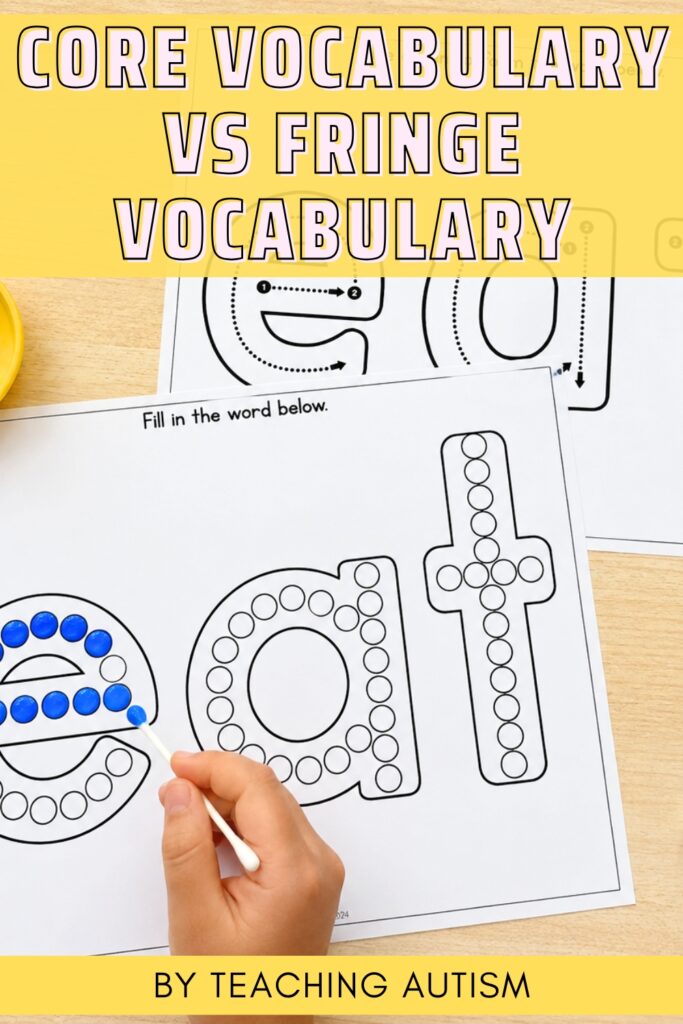
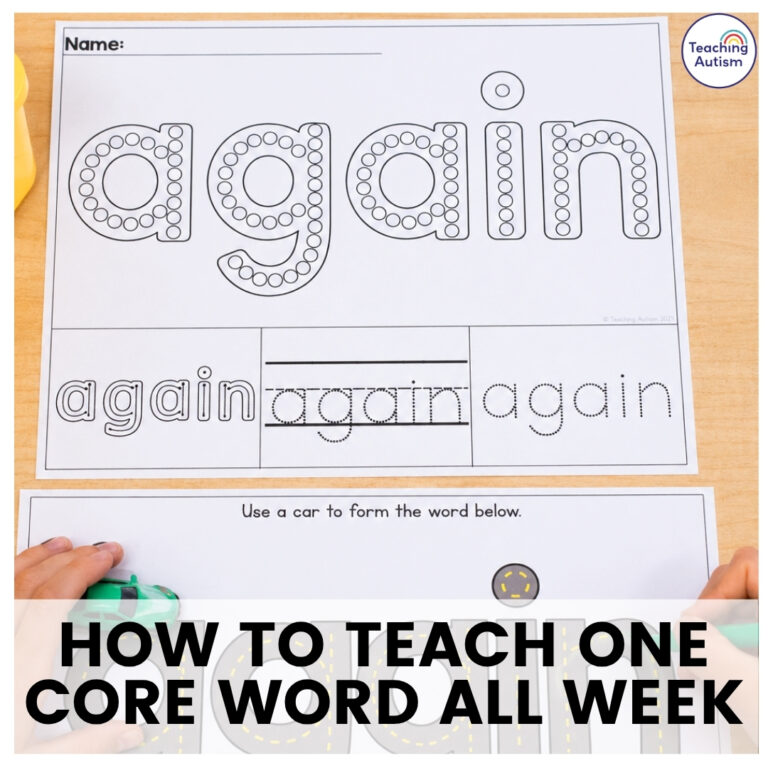
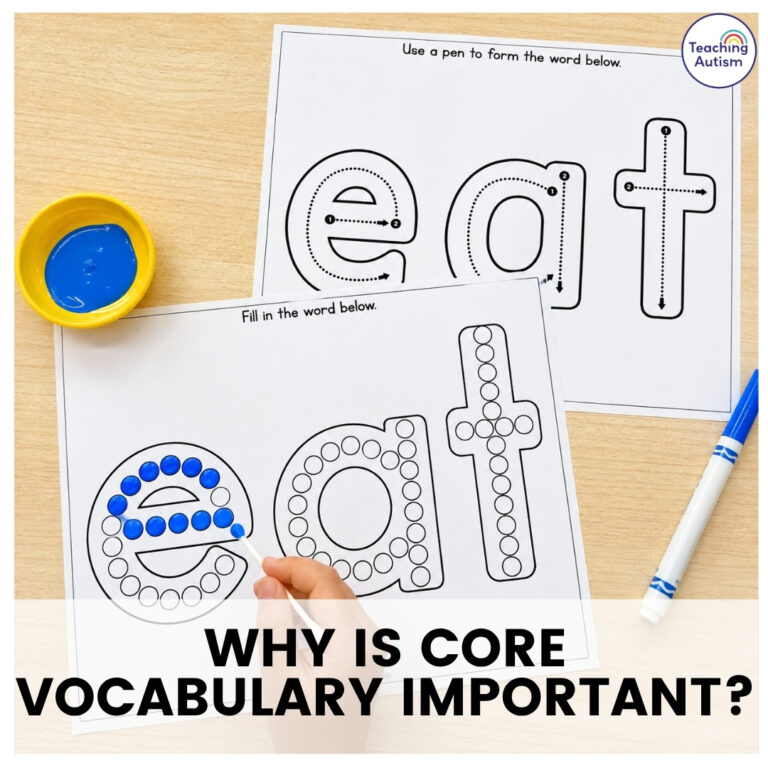
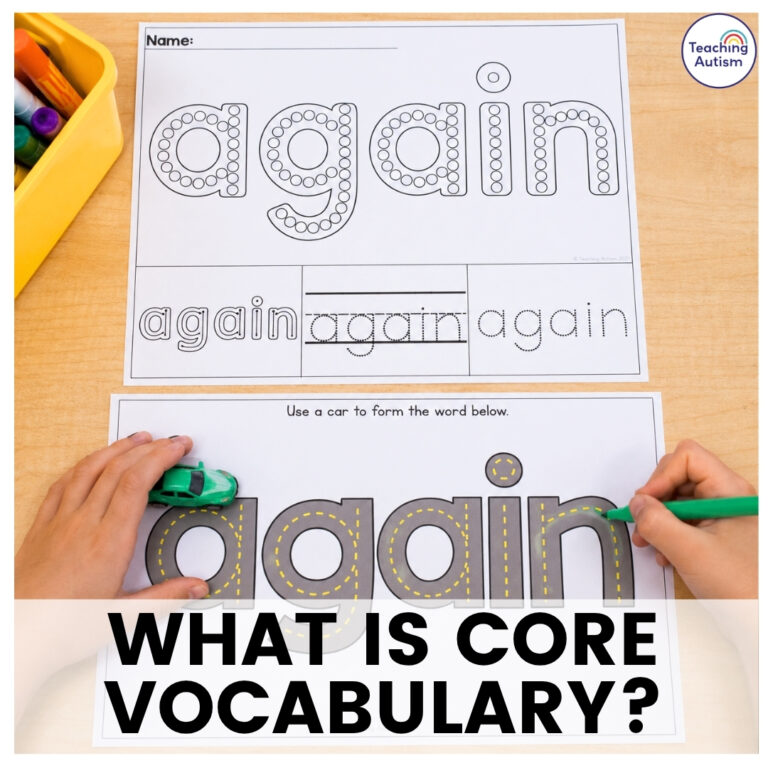
Each core word includes a wide variety of engaging, hands-on activities, including adapted books, emergent readers, crafts, worksheets, play dough mats, handwriting activities, writing prompts, matching activities, and so much more.
The activities are designed specifically to be used in special education classrooms. These activities will make it easy to provide meaningful and repeated practice while also keeping your students engaged.
Take a look at my Core Vocabulary Activities Bundle here.
When it comes to core vocabulary vs fringe vocabulary, the answer isn’t about choosing one over the other. Both play an important role in helping our students become successful communicators. I hope this blog post has helped you to understand the role that both these vocabulary play in your student’s learning and communication skills.
CThe easiest way to remember all of this..
Core vocabulary gives students the flexible words that they can use throughout every part of their day. Fringe vocabulary allows them to talk about the people, places, foods, toys, and interests that make them who they are.
Together, they both create meaningful communication.
As teachers, our goal is to give students access to both types of vocabulary, model them consistently, and create lots of opportunities to use them in real-life situations. The more opportunities we provide, the more confident and independent our students will become.
If you found this blog post helpful, please consider sharing it with your friends and colleagues on social media, it helps more teachers find support, and it means the world to me and my little family too.
And if you haven’t already, be sure to check out my Free Resource Library for tons of classroom tools, visuals, and printables to make your teaching life easier (and a whole lot more fun!).
P.S. Have you signed up for my VIP membership yet? If not, head on over and sign up now. You’ll get access to hundreds and hundreds of resources, templates, crafts and more being uploaded every month!
Nikki