Why Is Core Vocabulary Important?
Why is core vocabulary important? It’s a question I hear all the time from teachers, parents, and professionals. The questions are usually from those who are just beginning their AAC or communication journey.
Once you understand why core vocabulary matters.. It will completely change the way you think about teaching communication to your students.
If you’ve already read my blog post explaining what core vocabulary is, you’ll know that core vocabulary consists of the small group of words we use most often throughout our day. Words like go, stop, help, more, want, in, out, up, and look might seem simple, but they’re actually some of the most powerful words our students can learn.
So today I’m going to answer the burning question that always gets thrown at me… Why do we spend so much time teaching these little words instead of focusing on naming objects?
Core vocabulary gives students functional communication
One of the biggest reasons that core vocabulary is so important is because it gives our students the words that they can use almost anywhere, every day.
Think about it… If we teach a student the word apple, that’s fantastic but they can really only use it when talking about apples. They can’t really use it in any other situations or context.
Now think about the word more.
They can say:
- More bubbles.
- I want more food.
- Can we have more music.
- I want more books.
- I need more time.
- I want more juice.
That’s one word that is being be used hundreds of times throughout the school day, at home.. in different situations, environments, context…
The same goes for words like help, go, stop, want, and look.
These words aren’t tied to just one activity or any singular thing. They can be used during circle time, centers, recess, lunch, sensory play, reading, art, and even at home.
That’s exactly what makes these core words so valuable.
Core vocabulary helps students become independent communicators
As teachers, we don’t just want our students to answer questions… We want them to communicate, ask for help when they need it, tell us when they want something to stop. Being able to make choices and share their own thoughts, opinions, feelings and ideas is so important to our students.
Core vocabulary gives our students the tools to do exactly that.
Instead of relying on an adult to guess what they need.. Our students will begin to learn words that help them to take control of their own communication. And that’s a huge step toward independence!!
Communication happens all day long
One mistake I sometimes see is treating communication as something that only happens during speech therapy or a language lesson. But the truth is, communication happens all day long.. every day. It happens during transitions, snack time, play time, sensory activities, morning meeting, recess, reading.. it literally happens everywhere. Every single one of those moments is an opportunity for us to model core vocabulary and for our students to practice it.
The more often that our students hear and use these words in meaningful situations, the more likely they are to begin using them independently.
Core vocabulary grows with your students
One of my favorite things about teaching core vocabulary is that the words continue to grow with our students. Let’s look at the word ‘go’ as an example. A student who is just learning might use it to request to ‘go’ but.. a little later on, they might expand to ‘go outside’ and then it may be ‘I want to go home.’
That same word is going to continue to support their communication as their language develops. Instead of fringe vocabulary words.. Core words don’t become too easy or outdated. They are useful for life.
Core vocabulary supports AAC users
If your students are using AAC (Augmentative and Alternative Communication), then core vocabulary becomes even more important.
Most AAC systems place core vocabulary right on the home page, that’s done for a reason.. Because these are the words users need most often. Instead of users constantly navigating through different folders to find different nouns, students can quickly access words that help them build meaningful messages.
For example, with just a few core words, a student can communicate:
- I want more.
- Help me.
- Go fast.
- Stop that.
- Look here.
Those simple messages can have a huge impact on a student’s ability to participate in everyday life and begin to work towards independence.
It’s about more than requesting
Many people think communication is simply asking for things, but communication is so much bigger than that. We communicate to:
- Comment
- Ask questions
- Tell stories
- Share opinions
- Protest
- Make choices
- Greet others
- Describe experiences
- Express emotions
Core vocabulary gives our students the building blocks to do all of those things. That’s why we don’t want to teach our students to only request their preferred items. We want to help them become confident communicators who can participate in conversations and express themselves throughout the day, every day.
Teaching core vocabulary doesn’t have to be complicated
The good news is that you don’t need elaborate lesson plans to teach core vocabulary to your students. Some of the best learning for core vocabulary happens naturally.
Focus on modelling words while you’re reading books, use them during crafts, point to them during sensory play, practice them during movement breaks and repeat them during classroom routines.
The more students hear and see these words used in meaningful ways, the stronger their understanding becomes. All of these little moments throughout the day often have the biggest impact.
Looking for ready-to-use core vocabulary activities?
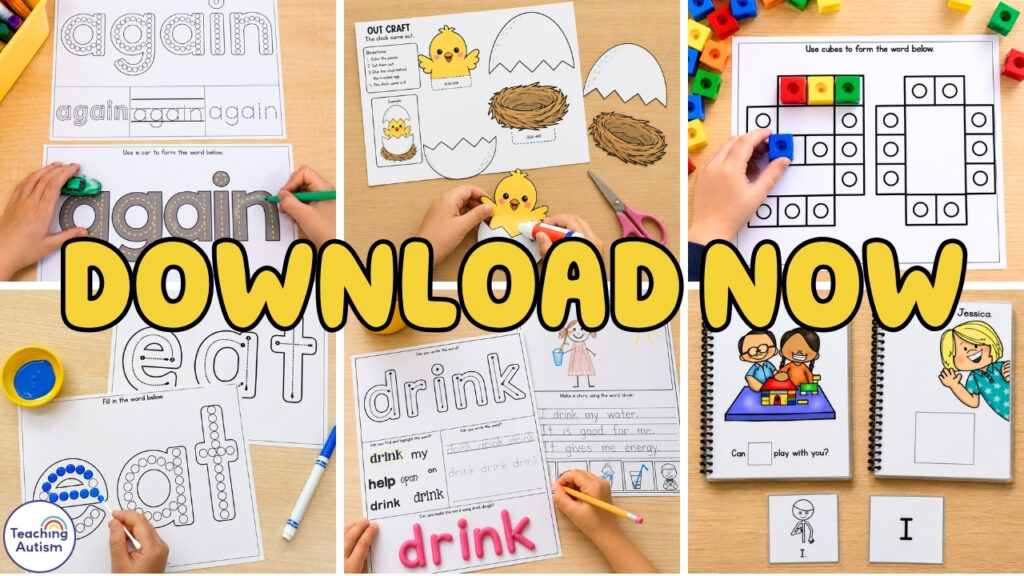
If you’re looking for fun, engaging ways to teach core vocabulary without spending hours creating your own materials, I’ve got you covered!
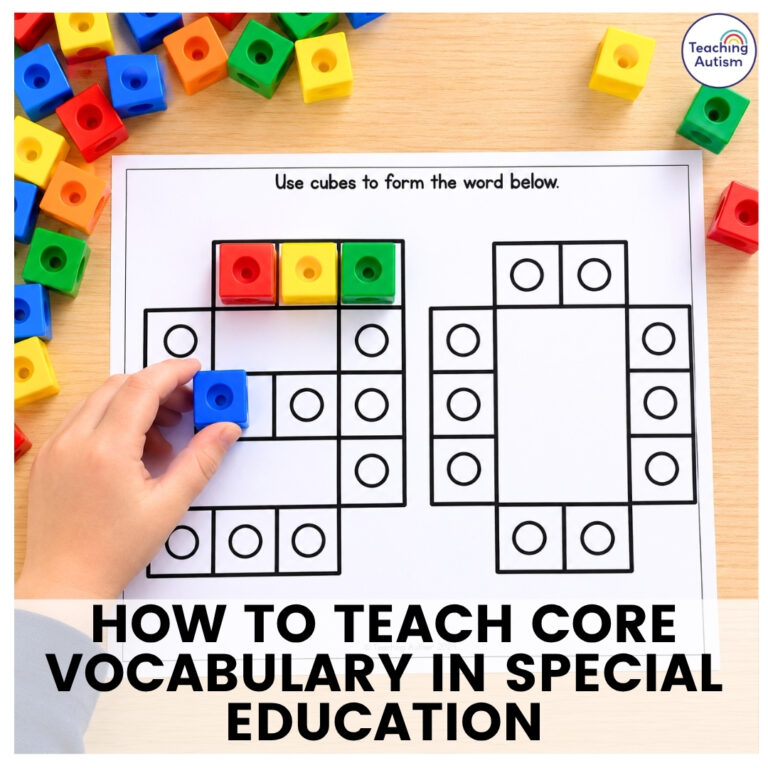
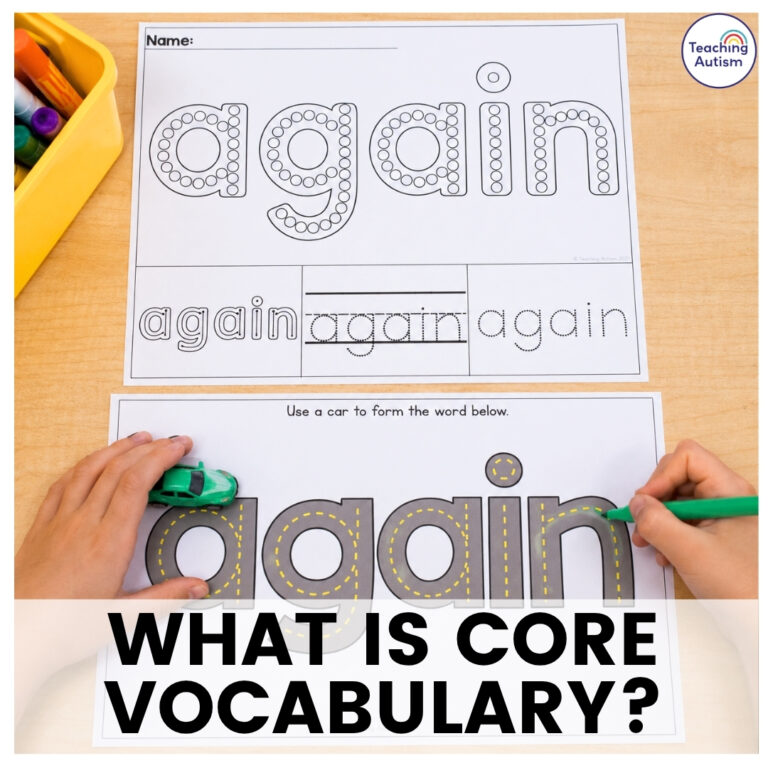
I created my Core Vocabulary Activities Bundle to make teaching these important words simple and enjoyable. Each core word includes a wide variety of activities, including adapted books, emergent readers, crafts, worksheets, play dough mats, handwriting activities, writing prompts, matching activities, and so much more.
Whether you’re introducing a brand-new core word or providing extra practice throughout the week, you’ll have plenty of ready-to-print activities to keep your students engaged while building meaningful communication skills.
Check out my Core Vocabulary Activities Bundle here.
Core vocabulary is important because it gives our students something far more valuable than a list of words. It gives them a voice… independence.. a way to communicate with us.
These everyday words help our students to communicate across every part of their day. Whether they’re asking for help, making choices, joining conversations, or expressing their thoughts and feelings.
The beauty of core vocabulary is that these words will never stop being useful to our students. They grow with them, they support their communication in countless situations. But most of all, they provide the foundation for language development.
If you found this blog post helpful, please consider sharing it with your friends and colleagues on social media, it helps more teachers find support, and it means the world to me and my little family too.
And if you haven’t already, be sure to check out my Free Resource Library for tons of classroom tools, visuals, and printables to make your teaching life easier (and a whole lot more fun!).
P.S. Have you signed up for my VIP membership yet? If not, head on over and sign up now. You’ll get access to hundreds and hundreds of resources, templates, crafts and more being uploaded every month!
Nikki